As an Amazon Associate, we earn from qualifying purchases. Some links on this site are affiliate links at no extra cost to you. Our recommendations are based on thorough research and editorial judgment.

Brush Cleaning Myths That May Be Damaging Your Tools

When it comes to brush care, we’ve all heard a few tall tales that can actually harm our tools! For instance, using hot water can warp handles and loosen ferrules—yikes! Rinsing just once? That’s a recipe for stiff bristles. And don’t rely on quick wipes or an old toothbrush; they won’t do the trick either. Proper care can extend brush life dramatically, so let’s bust these myths together! Stick around for a few more essential tips!
Key Takeaways
- Cleaning brushes in hot water can expand the ferrule, weakening the brush and leading to bristle loss.
- Rinsing brushes only once allows stubborn paint to remain, stiffening the bristles and shortening the brush’s lifespan.
- Regular soap may leave a residue; specialized brush soap mixed with lukewarm water is more effective for thorough cleaning.
- Dipping brushes in solvent risks bristle damage; gentle wiping on a towel is a safer cleaning method.
- Soaking brushes in water can loosen ferrules, resulting in bristle loss; quick cleaning post-use is preferred.
The Importance of Proper Brush Care

Hey there! When you’re painting, it’s super easy to get caught up in the techniques and color choices, but have you ever thought about your brushes? Proper brush care is really important for making sure they last and work well. If we don’t take care of them, it can definitely affect our artwork.
Trying to dedicate time each week for a deep clean can really enhance the life of your brushes—like, up to 80%! That’s impressive, right? Make sure you keep your brushes in a cozy environment, ideally between 70-85°F, to prevent the bristles from hardening or paint from settling in. After washing, remember to reshape the brushes; a wonky brush can lead to awkward strokes on your canvas!
With just a little effort, you can ensure your brushes perform at their best, making your painting experience even more enjoyable. It’s all about giving them the love they need! Speaking of caring for your tools, let’s talk about how to maintain your color palettes next. Using conditioned bristles with gentle cleaning sprays can also extend your brush’s lifespan and performance.
Myth #1: Cleaning Brushes in Hot Water Is Effective
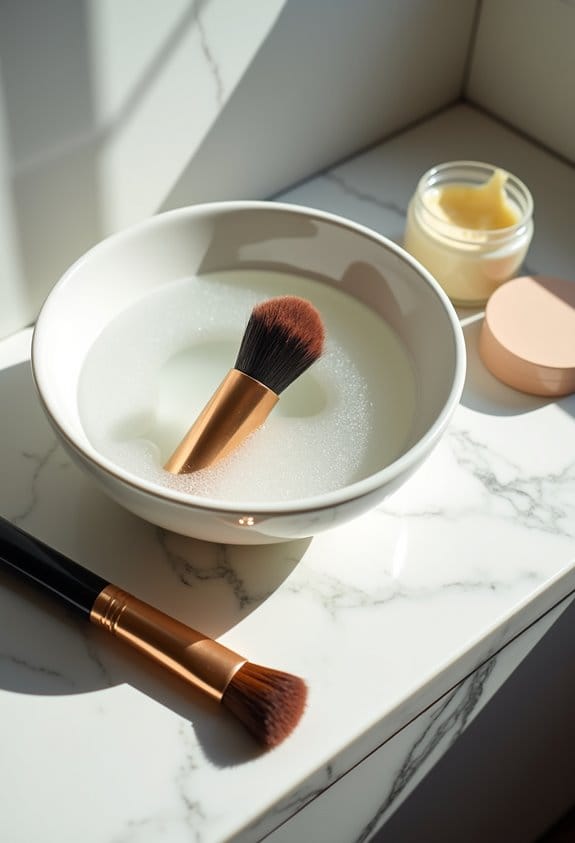
Hey there! You might think that cleaning brushes in hot water is an effective way to keep them spotless, but let me warn you—it can actually be pretty damaging! When you use hot water, the ferrule (that’s the metal part that holds the bristles) can expand. This expansion might cause bristles to fall out, which is the last thing you want!
Also, high temperatures can set proteins from the paint deeper into the bristles, making it harder to clean them effectively. Don’t forget about the handle either! If your brush has a wooden handle, hot water can warp it and loosen adhesives, shortening its lifespan by about 25%. So, the next time you clean your brushes, stick to lukewarm water around 70-85°F (21-29°C). This temperature is comfy for your brushes and helps keep them in prime condition, ready for your next creative project. Proper maintenance and gentle cleaning techniques, like using reusable sponges with appropriate textures, can greatly increase the longevity of your tools.
Myth #2: Rinsing Brushes Once Is Sufficient
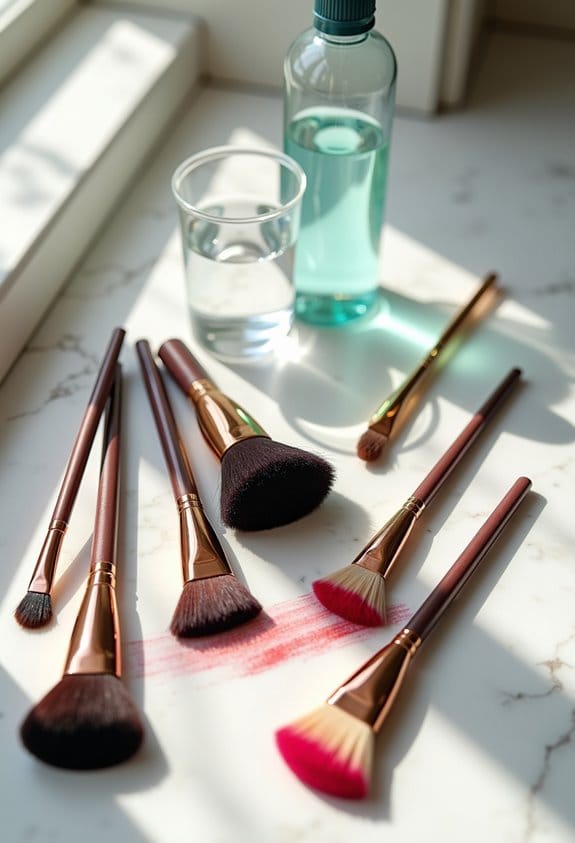
Hey there! Let’s chat about a common myth—rinsing your brushes just once isn’t enough. If you only give them a quick rinse, you’re probably leaving some stubborn paint behind. That leftover paint can dry and make your brushes all stiff and unworkable. Trust me, that’s not a fun situation when you’re trying to get that perfect paint job!
Professional painters have a solid tip: rinse your brushes multiple times. When you rinse until the water runs clear, you ensure all the paint is gone. This simple step can really extend the life of your brushes—by up to 80%! Imagine how much smoother your painting sessions will be without crusty bristles getting in your way. Regular cleaning also plays a crucial role in extending brush lifespan and maintaining their optimal performance.
Myth #3: Using Soap Is All You Need for Cleaning
You know, many people think that just using soap is enough for cleaning our beloved brushes, but that’s not quite true! While soap is important, it can actually leave a sticky residue that messes with how our brushes work. For stubborn dried paint, we really need that specialized brush soap mixed with warm water—not too hot, though!
So, what can we do? First off, grab some specialized brush soap that’s designed for artists; it’s much more effective than regular soap. Next, mix that with warm water, ideally around 70 to 85 degrees Fahrenheit—that sweet spot really helps break down the paint. And don’t forget to rinse thoroughly! Leaving soap behind can lead to gunky brushes that don’t perform well at all. Using a cleaning tool with ergonomic grips can also help remove stubborn grime more effectively without damaging the brush bristles.
Myth #4: Dipping Brushes in Solvent Is Safe
Hey there! So, you might think that dipping your brushes in solvent is an easy way to clean them, right? Well, let me tell you, it’s more like a shortcut to trouble! While solvents can seem like a quick fix, they actually weaken the bristles and can ruin the ferrule, which is that metal part holding the bristles together. Before you know it, your brush could be wearing out way too soon.
Instead of soaking your brushes in solvents, let’s talk about some better cleaning methods. For example, try gently wiping the brushes on a paper towel to remove paint. You can also use a small amount of solvent on the towel, rather than dunking the whole brush. Plus, keep an eye out for any build-up of solvent residue on your brushes; that gunk can mess with how the paint goes on. Proper maintenance and durability practices are essential to extend the life of your tools.
Myth #5: Letting Brushes Soak in Water Is Beneficial
Hey there! You might think that putting your paintbrushes in a cup of water after painting is like giving them a little spa treatment, right? It definitely feels tempting! But here’s the thing: soaking your brushes can actually do more harm than good. When they sit in water for too long, it loosens the ferrule—the metal part at the base—and that can make the bristles fall out or get all warped.
Instead, it’s much better to give your brushes a quick clean right after you’re done painting. Just rinse them in lukewarm water to get rid of the paint, then use a bit of gentle soap to clean them up nicely. For extra care, reshape the bristles while they’re still wet; this helps keep them in great condition for your next masterpiece!
Taking a few extra moments to clean your brushes properly can really extend their life. So, let’s toss the soaking myth aside and treat our brushes with the respect they deserve! It’s a small effort that leads to better results in your art. Speaking of tools, have you thought about the best way to store your brushes when you’re not using them? Proper storage and care, similar to using the right temperature control on hair tools, can significantly improve their longevity.
Myth #6: All Brushes Can Be Cleaned the Same Way
Hey there! Have you ever thought you could just toss any brush into the same cleaning routine? Well, guess what? Not all brushes can be cleaned the same way, and that’s something you definitely want to keep in mind. Different types of brushes have their own cleaning quirks. For example, synthetic brushes love a good rinse in warm water with some mild soap, while natural hair brushes actually perform better with specialty brush soaps.
If you ignore these specific cleaning methods, you might end up with hard bristles that just won’t do the job anymore—yikes! Plus, if you’re working with acrylic paints, don’t wait too long to clean those brushes. Aim for a quick wash within 15-20 minutes, or the paint will dry on there faster than you can say “oops!” So really, taking a bit of time to clean each brush the right way will keep them functioning well and can even extend their lifespan. Treat your brushes right, just like you would your favorite pair of shoes, and they’ll thank you for it!
Now, speaking of paint, let’s chat about the best ways to store your brushes when you’re done using them. Also, consider incorporating silicone makeup sponges into your routine for easier cleaning and reduced product waste.
Myth #7: Leaving Paint in Brushes Overnight Is Fine
Hey, have you ever thought it was okay to leave paint in your brushes overnight? A lot of people do, but that can really mess them up! When paint dries in the bristles, it can make them stiff—imagine trying to paint with a broom instead of a nice, flexible brush. Not so fun, right?
The good news is that keeping your brushes in top shape is super simple. Just wash them right after you’re done painting. This prevents the paint from drying and keeps the bristles in their original shape. Plus, it can actually make your brushes last about 25% longer! For instance, after finishing a project, just rinse your brushes with warm water and a bit of soap, and you’ll see how easy it is to maintain them.
Using durable materials designed for longevity can also help your tools stay effective even with frequent cleaning.
Myth #8: Using Old Toothbrushes for Cleaning Is Ideal
You know those old toothbrushes you’ve been saving in your bathroom drawer for cleaning? It’s tempting to grab one for a quick tidy-up, right? But let me tell you, those worn-out bristles aren’t going to get the job done. They’re too soft to really scrub off dirt, and let’s not even think about the germs lingering on that brush—yikes!
Instead of reaching for that repurposed toothbrush, why not try some good quality cleaning tools designed specifically for the job? For example, a small scrub brush can be great for getting into tight corners, and a microfiber cloth works wonders for dusting without scratching surfaces. It’s about having the right tools to keep your home fresh and clean. Using easy-clean materials can also make maintenance much simpler and more effective.
Myth #9: Quick Wipes Are Enough for Brush Maintenance
You know, when it comes to brush maintenance, a lot of people think that just doing a quick wipe is enough. But honestly, that’s not doing our brushes any favors! Sure, a quick swipe can clean the surface, but it often leaves behind paint hiding deep in the bristles. Over time, this can really mess with how the brush performs and even cause the bristles to harden.
Instead of relying on those speedy wipes, it’s way better to rinse your brushes thoroughly with soap and water. For example, if you’re using acrylic paint, make sure to wash the brush under warm water while gently working the bristles with your fingers. Studies show that brushes cleaned properly this way can last up to 80% longer than those that just get wiped. So, let’s take a little extra time to care for them. After all, these brushes aren’t just tools; they’re the sidekicks in your creative journey!
Now that we’ve got brushing down, let’s chat about the best ways to store them when you’re done using them. Using waterproof makeup brush bags can help keep your brushes clean and protected during storage or travel.
Myth #10: Expensive Brushes Don’t Require Special Care
Hey there! So, you know those expensive brushes you splurged on? Just because they have a hefty price tag doesn’t mean they’re bulletproof against wear and tear. Trust me, I’m all for investing in quality tools, but if we don’t take care of them, they can quickly lose their magic!
Think about it: even the fanciest brushes, made from high-quality materials, need a little TLC. For instance, if you’re washing your brushes, avoid using hot water. It can actually damage the ferrule (that’s the metal part that holds the bristles) and lead to bristle loss. Instead, go for lukewarm water and a gentle soap. After washing, don’t forget to reshape those bristles. It might seem like a small thing, but it can really help maintain their shape and performance.
Frequently Asked Questions
Should I Spray WD-40 on My Tools?
We shouldn’t spray WD-40 on our tools; it can ruin them. Instead, let’s explore alternative lubricants and maintain our tools with proper cleaning frequency to guarantee effective tool care and longevity in our projects.
Are You Supposed to Clean Your Hairbrush?
Absolutely, we should prioritize hairbrush maintenance! By cleaning our brushes regularly, ideally every month, we guarantee bristle care, enhance tool longevity, and effectively manage product buildup. Let’s explore product recommendations to make cleaning easier.
What’s the Best Thing to Clean Tools With?
The best cleaning solutions for our tools involve using appropriate cleaning agents like mild soap and water. Regular maintenance with these techniques not only guarantees tool longevity but also enhances performance, keeping our equipment in top shape.
How Often Should You Clean Your Cleaning Tools?
We should clean our tools after each use to prevent dirt buildup and guarantee tool longevity. For best results, let’s follow maintenance tips and consider product recommendations for effective cleaning frequency and ideal performance.