As an Amazon Associate, we earn from qualifying purchases. Some links on this site are affiliate links at no extra cost to you. Our recommendations are based on thorough research and editorial judgment.


Sponge Application Tips for Acne‑Prone or Textured Skin

When we’re applying makeup on acne-prone or textured skin, using the right sponge is key! We should look for softer, hypoallergenic sponges that won’t irritate our skin. Dampen the sponge a bit to help blend foundation smoothly—no one wants to see those dry patches! And remember to clean it after every use to keep bacteria at bay. If you’re curious about top sponge recommendations and care tips, there’s more to explore right here!
Key Takeaways
- Use a damp makeup sponge to enhance blending and create a smoother finish on acne-prone or textured skin.
- Opt for foundations and makeup products that are non-comedogenic to prevent clogged pores and irritation.
- Gently dab the sponge onto your skin rather than rubbing it to minimize irritation on sensitive areas.
- Regularly clean your sponge with gentle soap to limit bacteria buildup and promote healthier skin.
- Test makeup products on a small area before full application to ensure they don’t irritate your skin.
What to Look for in a Makeup Sponge for Acne-Prone Skin

Choosing the right makeup sponge for acne-prone skin can feel a bit daunting, right? But I’ve got your back! First off, you definitely want to pick a sponge made from latex-free, hypoallergenic materials like polyurethane foam. This little detail can make a huge difference in reducing the chances of skin irritation. Another big factor is to look for sponges that have antimicrobial properties. This helps keep bacteria at bay, which is super important since bacteria can easily build up on sponges.
Next, think about the texture. Go for something soft and gentle; this will help avoid irritating your sensitive skin. Regularly cleaning your sponge is a must, too! I recommend washing it with a gentle cleanser at least once a week. Also, a denser sponge that isn’t overly absorbent is ideal—it lets you achieve that flawless makeup finish without making things look cakey. Remember, it’s all about enhancing your natural beauty! Choosing sponges with low absorption materials can also help conserve makeup and reduce waste, making application more efficient and hygienic.
Top Makeup Sponge Recommendations for Acne-Prone Skin
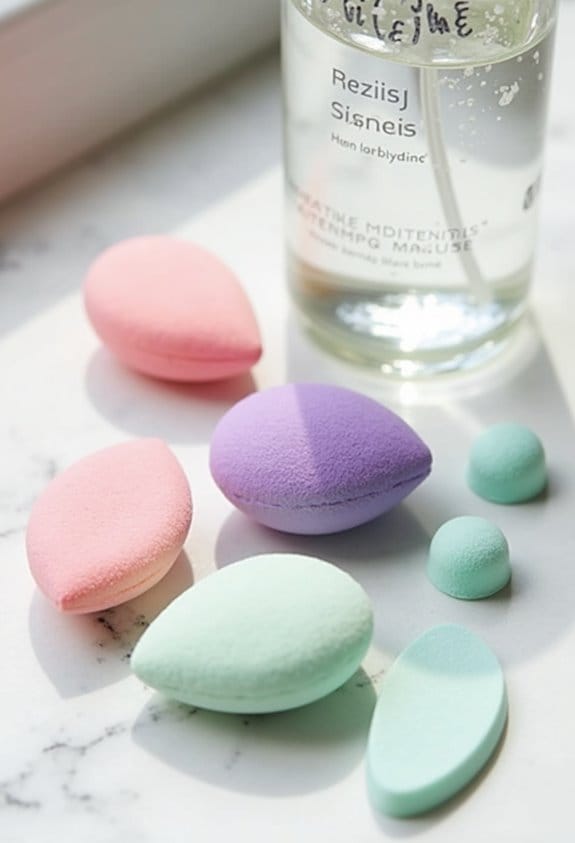
If you’ve got acne-prone skin like I do, finding the right makeup sponge can seriously change the game. One of my favorites is the Meerah Belle Contour Star Makeup Sponge. It’s super soft and comfy to use, plus it has antimicrobial properties. That means it helps keep bacteria at bay, which is essential for anyone dealing with breakouts!
What’s even cooler is that it’s made from plant-based materials that are biodegradable, so it’s also a great choice if you’re trying to be more eco-friendly. And since it’s hypoallergenic, it’s less likely to irritate our sensitive skin. Just a tip—make sure to clean your sponge with a gentle cleanser after every use and swap it out for a new one every 1-3 months. This little routine can help you achieve smooth makeup application while also taking care of your complexion.
Using tools with cruelty-free and vegan certifications also supports ethical beauty practices along with skin health.
With the right makeup tools, you’ll notice not just how easy application is, but also how your skin feels afterward—definitely a win-win! Let’s explore some more options so you can find what fits best for your needs!
Tips for Using Makeup Sponges Effectively

You know that moment when you’re at the mirror, hoping to achieve that perfect, flawless finish, but instead, you end up with clumpy, uneven makeup? Trust me, we’ve all been there! Let’s chat about how you can use makeup sponges effectively to help you get that polished look.
First things first, you should always dampen your sponge before application. It’s not just a random tip! When you wet your sponge, it absorbs less product, which means more foundation goes on your skin instead of getting soaked up by the sponge. Just run it under some water and squeeze out the excess—easy peasy!
Next up, use gentle motions when applying your makeup. Dabbing or stippling is the way to go. This method helps reduce drag on your skin, which is particularly important if you have textured areas. For example, try lightly tapping the sponge around your cheeks and forehead for a seamless finish.
Now, let’s talk about sponge selection. Picking a good-quality sponge can genuinely make or break your makeup game. A sponge like the Meerah Belle Contour Star has the right texture and density to help you achieve that flawless look without any hassle.
And don’t forget about keeping your sponge clean! Regularly washing it not only keeps bacteria away but also ensures that your sponge performs at its best every time you use it. If you’re using it daily, consider replacing it every few months. Additionally, using hypoallergenic materials in your makeup tools can minimize irritation, especially if you have sensitive or acne-prone skin.
With these tips in hand, you’ll be well on your way to mastering the art of using makeup sponges. Now, how about we explore some fun techniques for different types of makeup applications?
Best Practices for Makeup Sponge Care
Hey there! So, let’s chat about makeup sponge care because it’s super important! Keeping your makeup sponge clean is just as crucial as nailing that application technique. After you use it, be sure to clean it right away. This helps stop bacteria from building up, which can really irritate your skin and even cause breakouts. Think about it this way: you wouldn’t wear dirty clothes, right? Your sponge deserves the same love!
When you dampen the sponge before use, it grabs your foundation perfectly without soaking up too much product. No one wants their sponge guzzling down foundation like it’s having a soda! To really give it that spa-like treatment, wash it thoroughly with some gentle soap and let it dry completely. Trust me, you don’t want mold hanging out with your makeup – that’s a definite no-go for a flawless look.
And here’s a little tip: aim to replace your sponge every 1-3 months. They definitely need a little refresh every now and then! Keeping your sponge in top shape ensures your makeup application stays on point. So, now that we’ve covered sponge care, let’s dive into the next steps in your beauty routine!
Regular cleaning also prevents skin irritation caused by bacterial buildup, which is key for maintaining healthy skin.
Application Techniques for Flawless Finish
Hey there! Let’s chat about how to achieve that flawless finish with your makeup. It’s really not as tricky as it might sound, especially when you have some nifty techniques up your sleeve! First things first, grab yourself a damp makeup sponge—it’s honestly a lifesaver. When you gently dab or stipple your foundation onto your skin, it helps avoid irritating any sensitive spots. So, when you blend around those delicate areas, just focus on using the softer edges of the sponge for that smooth, seamless look.
Now, when it comes to cream products, using a lightly damp sponge works wonders because it helps lock in moisture and keeps those pesky dry patches away. Here’s a little tip: after you’ve applied your makeup, try pressing the sponge lightly over your skin. This technique not only sets everything in place but also helps reduce excess shine, giving you that polished look. Remember, it’s all in the way you apply it, not just the products themselves!
For a truly radiant finish, proper skin preparation using gentle cleansing tools like a silicone bristle brush can help improve skin texture and create a flawless base for makeup.
As we move on, let’s explore some tips to enhance your overall makeup application, like the right tools and how to prep your skin for a truly radiant finish!
Maintaining Skin Health While Using Makeup Sponges
Hey there! You know, when it comes to keeping our skin healthy while using makeup sponges, there’s a couple of simple habits we really need to stick to. First off, it’s super important to clean our sponges after each use. Think about it—bacteria can thrive in those little things, and that can seriously mess with acne-prone skin!
Also, here’s a little tip: dampen your sponge before you apply makeup. This trick can help reduce friction, which means less irritation on your skin. Plus, don’t forget to swap out your old sponge for a fresh one every 1-3 months. It’s pretty much like giving your skin a mini spa day, and we could all use that kind of self-care, right?
Keeping these simple steps in mind can really help you maintain happy, healthy skin while still enjoying your favorite makeup looks! Using a chemical-free cleaning formula is also a great way to ensure your makeup tools stay hygienic without irritating sensitive skin. Now, let’s chat about some great makeup products that are gentle on the skin.
Frequently Asked Questions
Is a Brush or Sponge Better for Textured Skin?
We believe sponges are better for textured skin. While brushes can offer control, sponges’ advantages in blending and creating a smooth finish outweigh those benefits, especially when considering application techniques and texture considerations for a flawless look.
How to Reduce Skin Texture From Acne?
To reduce skin texture from acne, we’ve found effective exfoliation techniques and consistent moisturizing habits essential. Incorporating targeted acne treatments into our skincare routines has also helped smooth our skin and enhance its overall appearance.
How to Prep Textured Skin for Makeup?
To prep textured skin for makeup, we should use gentle exfoliation techniques, apply hydrating products, carefully select a primer, and ascertain thorough makeup removal. This’ll create a smooth, radiant canvas for our makeup.
Is It Better to Use a Beauty Blender or Brush for Acne Prone Skin?
We think beauty blenders are magic for acne-prone skin! With sponge benefits like softer application and less irritation, they beat brush application techniques. Let’s consider our skin types and choose wisely for flawless results!